Complex Dynamics Theory
Research Theme

Complex Dynamics Theory

Complex dynamics investigates the theories and laws governing unconventional evolutionary behaviors of dynamical systems, including chaos, bifurcation, synchronization, pattern formation and collective emergence.

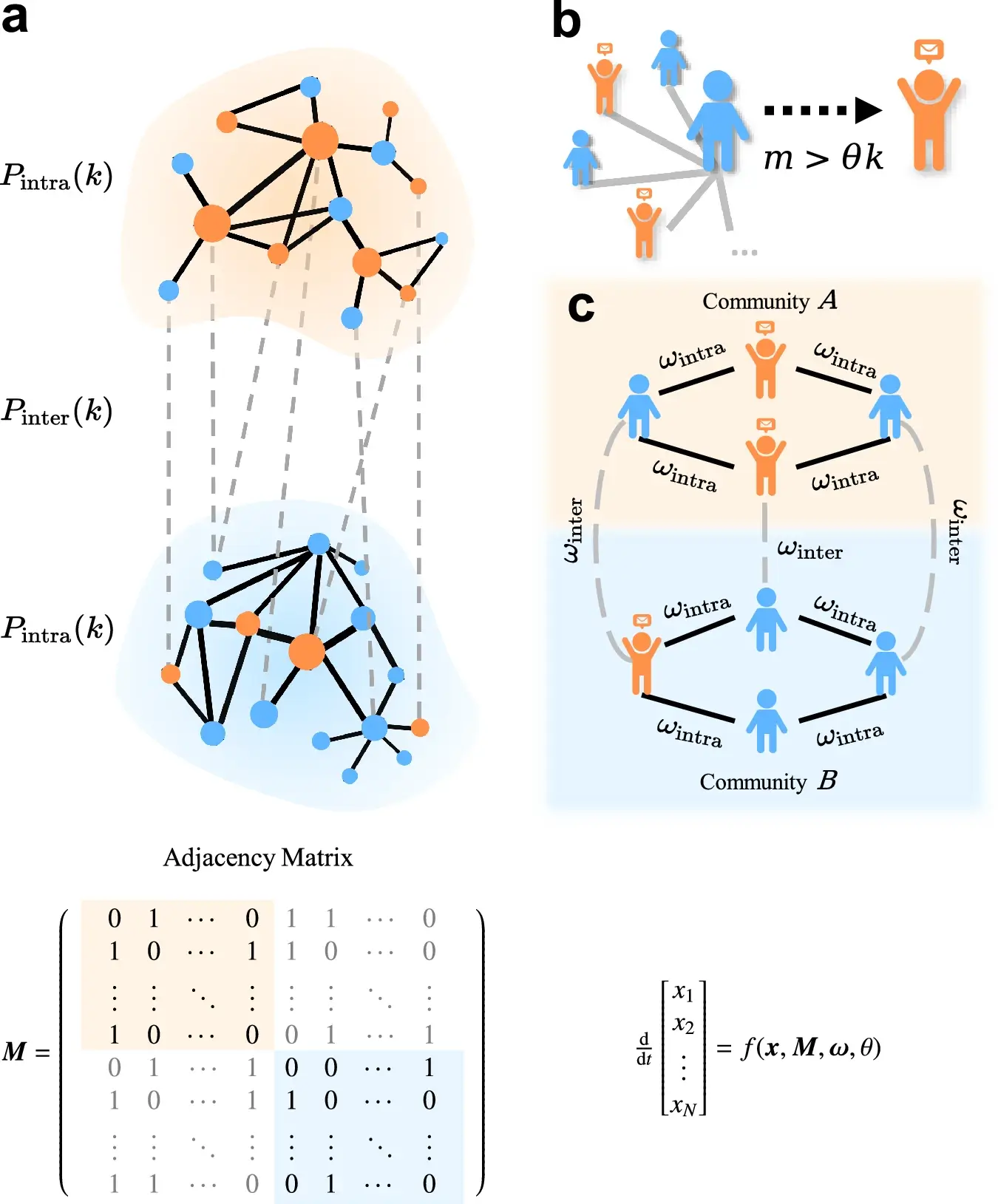
Evolutionary behaviors of complex systems such as chaos, synchronization and patterns do not emerge from simple superposition of individual units; instead, they arise under nonlinear coupling, time-delay feedback and multi-scale interactions. Focusing on chaotic bifurcations, synchronization dynamics and time-delay networks, the research group has established a comprehensive research system centered on nonlinear dynamical systems to analyze the evolutionary laws of complex systems.

The core scientific questions of this research field are as follows: What universal transition laws of chaos emerge when system parameters cross critical thresholds? How do multi-layer heterogeneous coupled networks achieve synchronization or suffer abrupt instability? Can Turing patterns and self-organized oscillations emerge in spatiotemporal systems disturbed by time delays, noise and other interferences? Relying on qualitative and quantitative analytical tools for dynamical systems, relevant research provides a general theoretical framework for interdisciplinary fields including information propagation networks, climatic spatiotemporal dynamics and coupled neuronal systems.

Theme Works