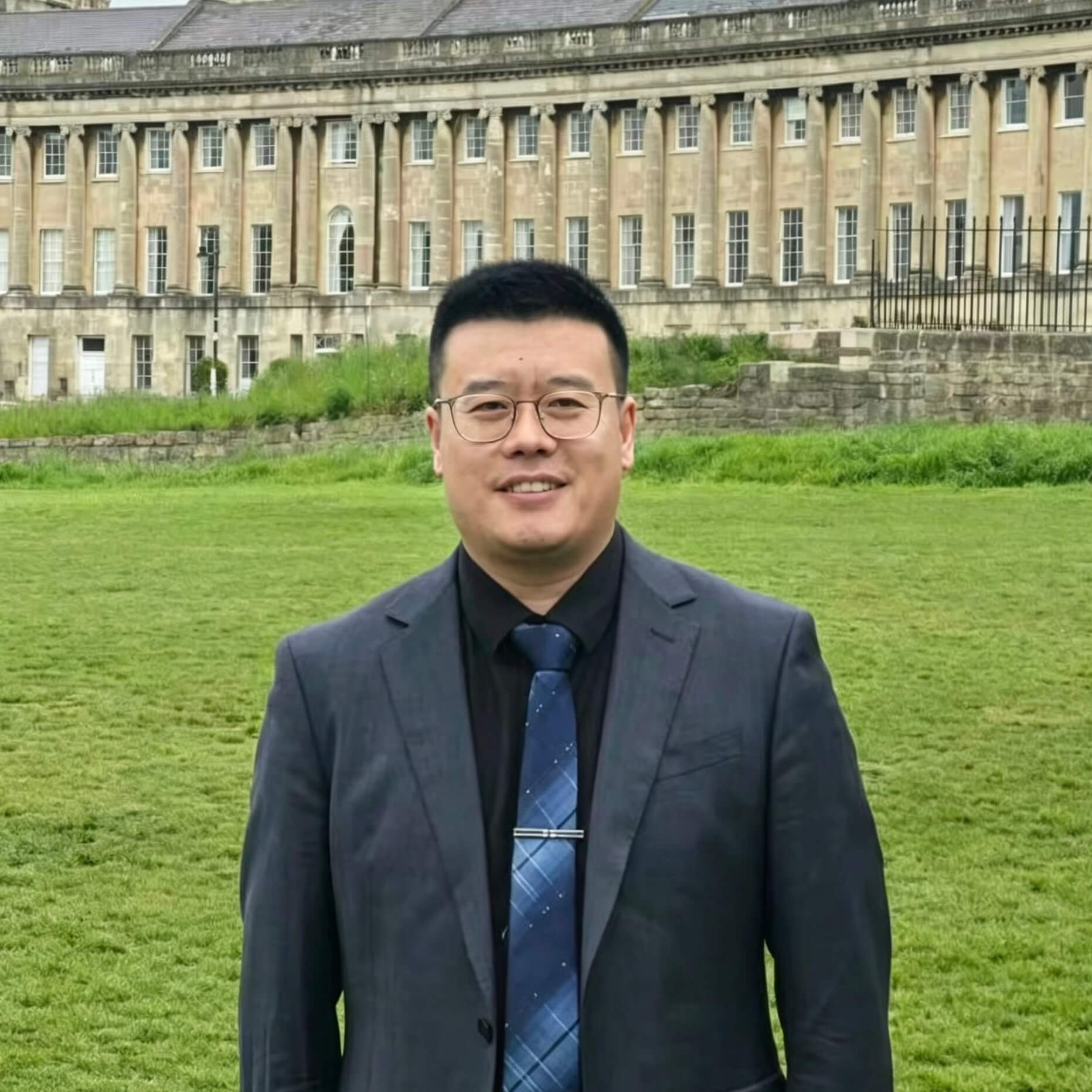
Jingfang Fan
Professor, Director, Ph.D. Supervisor · School of Systems Science, Beijing Normal University
Professor and Dean of the School of Systems Science at Beijing Normal University; Guest Professor at the Potsdam Institute for Climate Impact Research; Vice Chair of the Chinese Society of Systems Engineering; and Member of the China Society for Industrial and Applied Mathematics.
He has been selected for the National Science Fund for Distinguished Young Scholars (Category A) and the Youth Program of the Overseas High-Level Talent Program of the Organization Department of the CPC Central Committee. His honors include the Young Scientist and Technologist Award for Systems Science and Systems Engineering (2024, the highest honor for young researchers in China's systems engineering community), the Tsinghua University-Inspur Young Talent Award for Computational Earth Science (2025), and a nomination for the Powerful Nation Young Scientist Award (2023).
As first or corresponding author, he has published more than 40 papers in journals including Nat. Phys., Nat. Clim. Change, Nat. Mach. Intell., PNAS, and PRL. He serves as a Guest Editorial Board Member of Natl. Sci. Rev. and as an editorial board member or young editorial board member for several journals in China and abroad, including JPhys Complexity.
His research focuses on the theory and applications of complex systems.
Research Interests
Recent Highlights
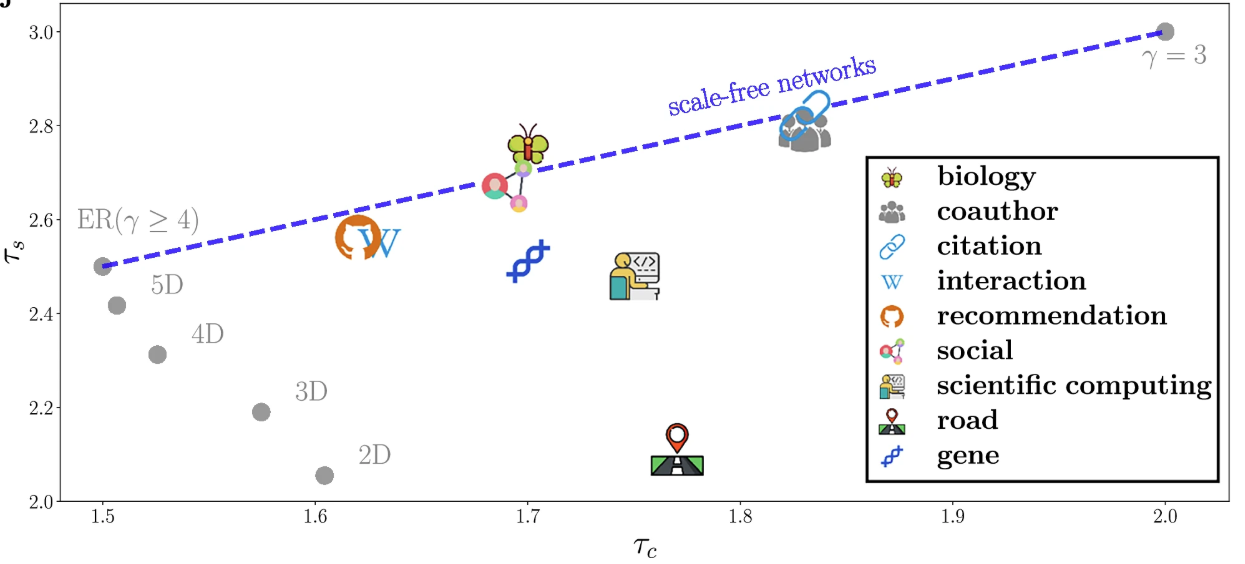
Temporal self-similarity reveals percolation universality classes in complex networks
From a dynamic perspective, we track the growth events of the largest connected cluster and establish a dynamic statistical framework. This reveals the temporal self-similar scaling behavior in dynamic percolation processes, based on which we characterize the percolation universality of multiple types of real-world networks.
Read more →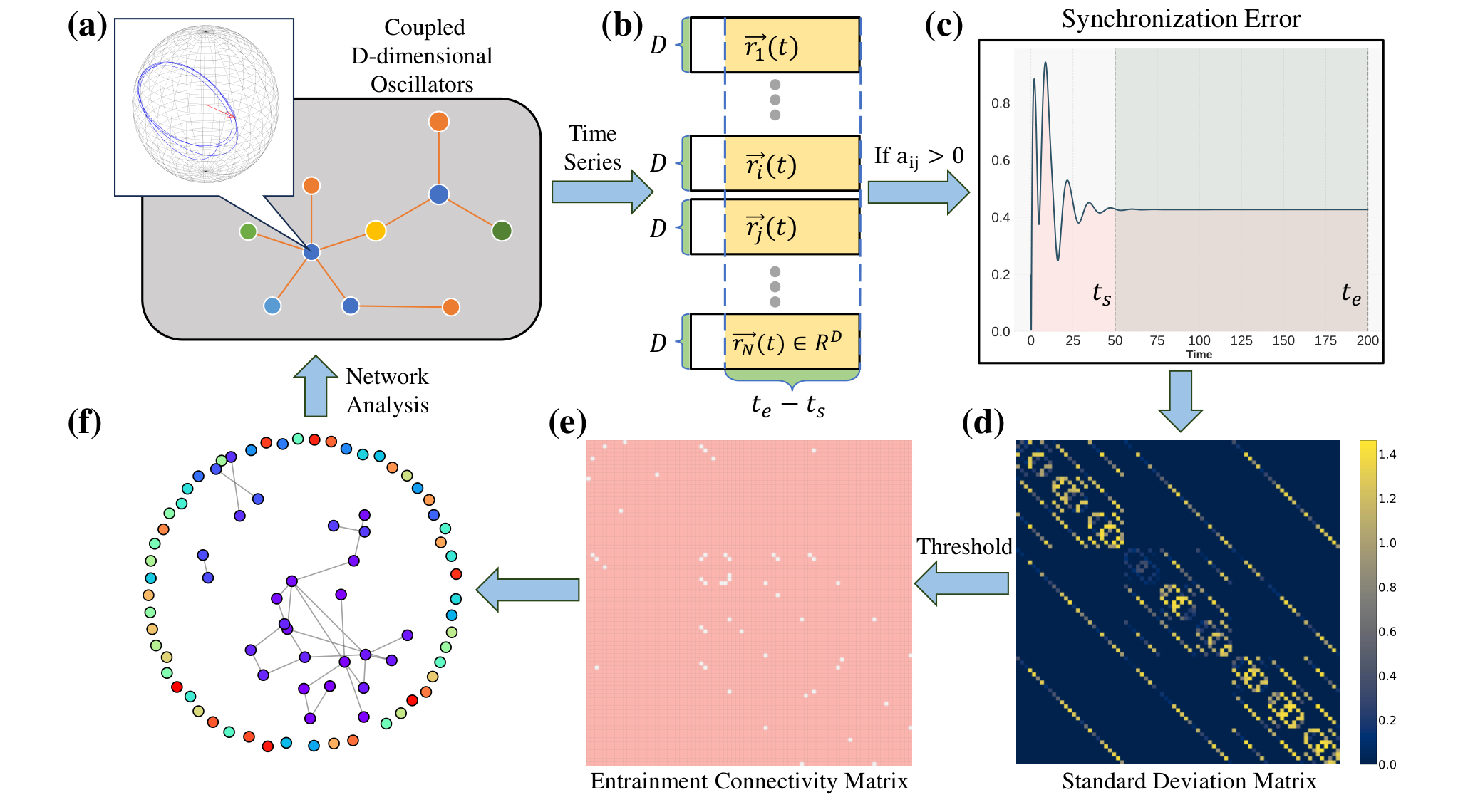
Criticality and Universality of the Generalized Kuramoto Model
We develop an entrainment connectivity matrix framework that generalizes synchronization to vectorial oscillators of arbitrary dimension, and map out the universality classes of the generalized Kuramoto model in the (n, d) plane — all even n share a single universality class with upper and lower critical dimensions 5 and 2. Published in Physical Review Letters.
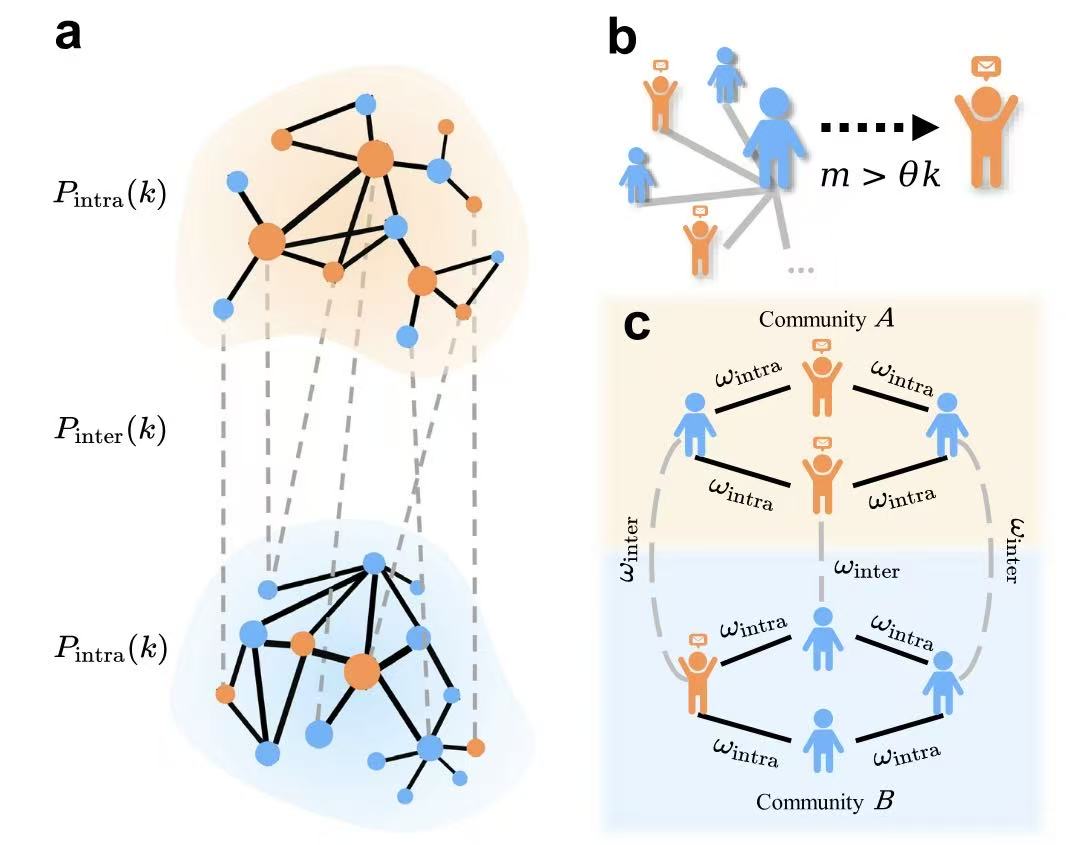
Community structure-regulation coupling reveals optimal information diffusion
It reveals three macroscopic states of information diffusion under the combined effect of structure and regulatory parameters, along with their critical phase diagram. It identifies the optimal control domain for containing propagation at the minimum intervention cost, and uncovers a non-monotonic dependence between the optimal intervention cost and the degree of community structure in the system.
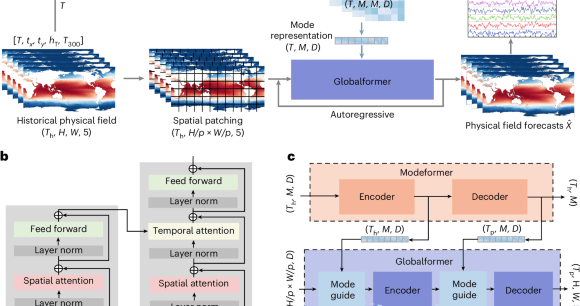
Learning the coupled dynamics of global climate modes
Introduces UniCM, a unified deep model that learns localized dynamics and global couplings directly from data to improve unified forecasting across major climate modes, published in Nature Machine Intelligence.
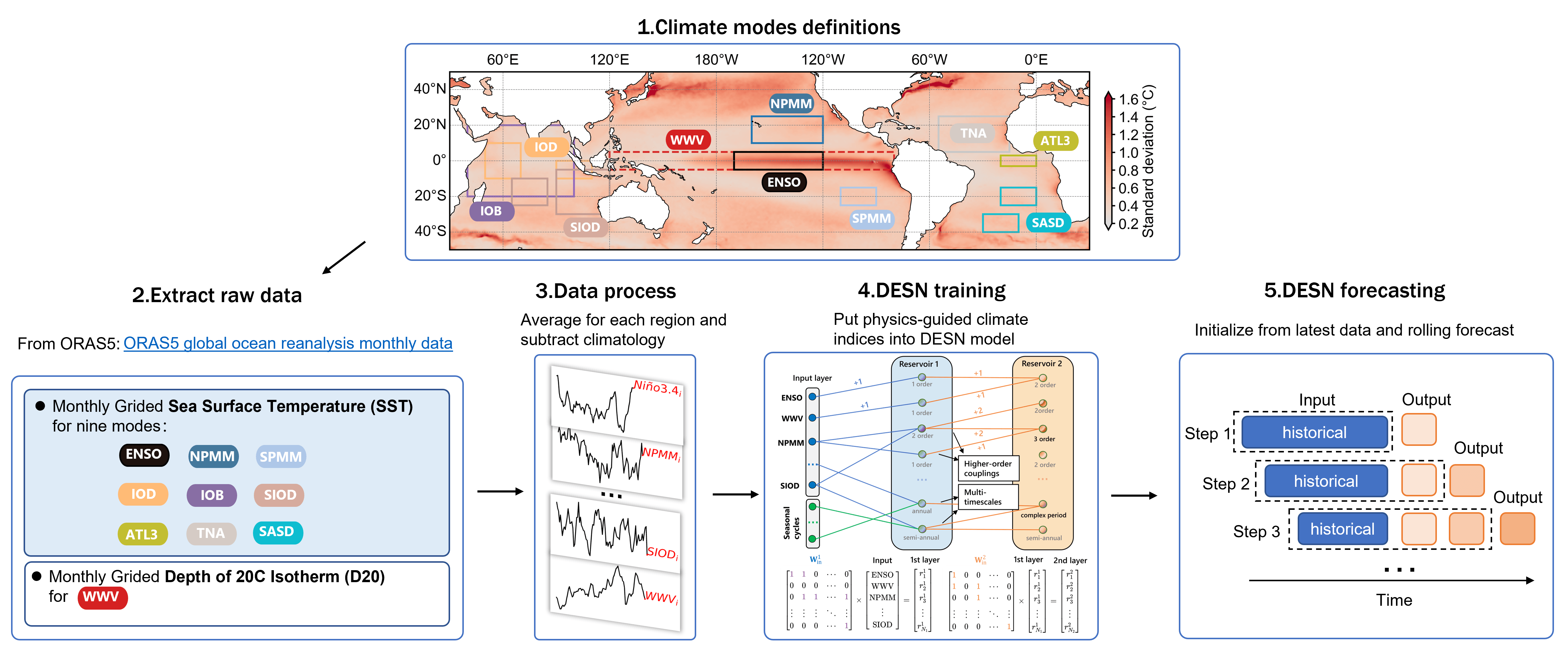
Enhancing the Predictability Limits of ENSO with Physics-Guided Deep Echo State Networks
A real-time ENSO forecasting workflow based on ORAS5 and DESN, showing climate-mode construction, ensemble training, and Niño3.4 predictions for 2026-2027.
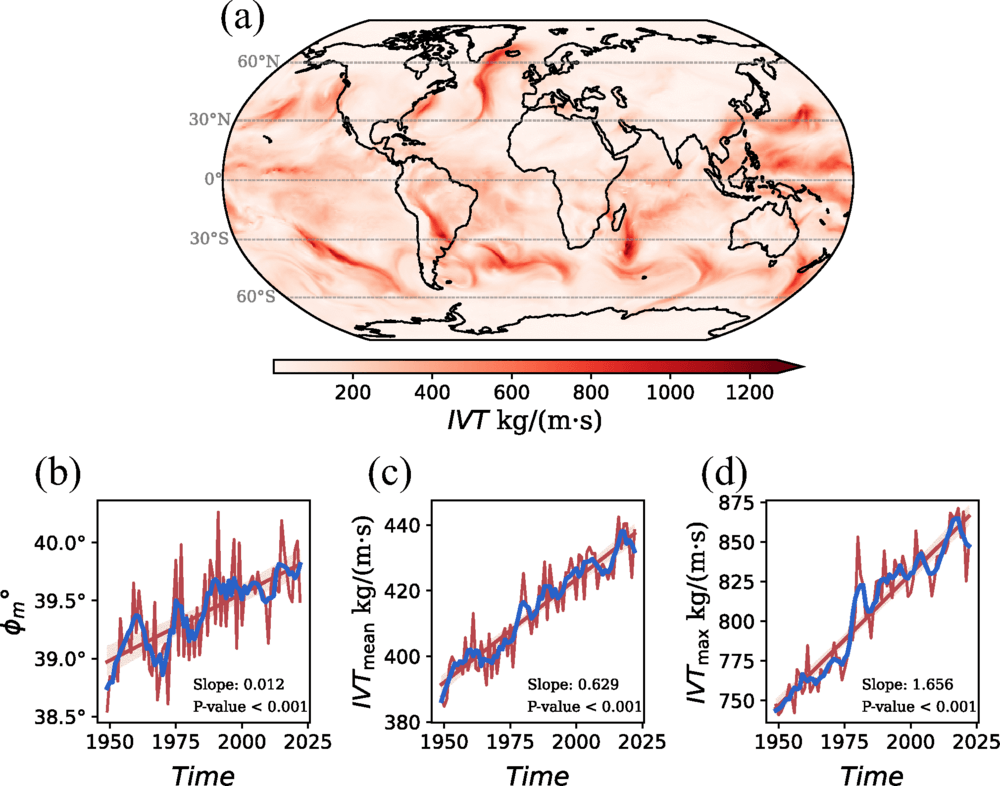
Self-Organized Criticality in Atmospheric Rivers
Starting from the theory of critical dynamics in statistical physics, it reveals that atmospheric rivers, as key water vapor transport structures in the Earth climate system, have the essential property of self-organized criticality.
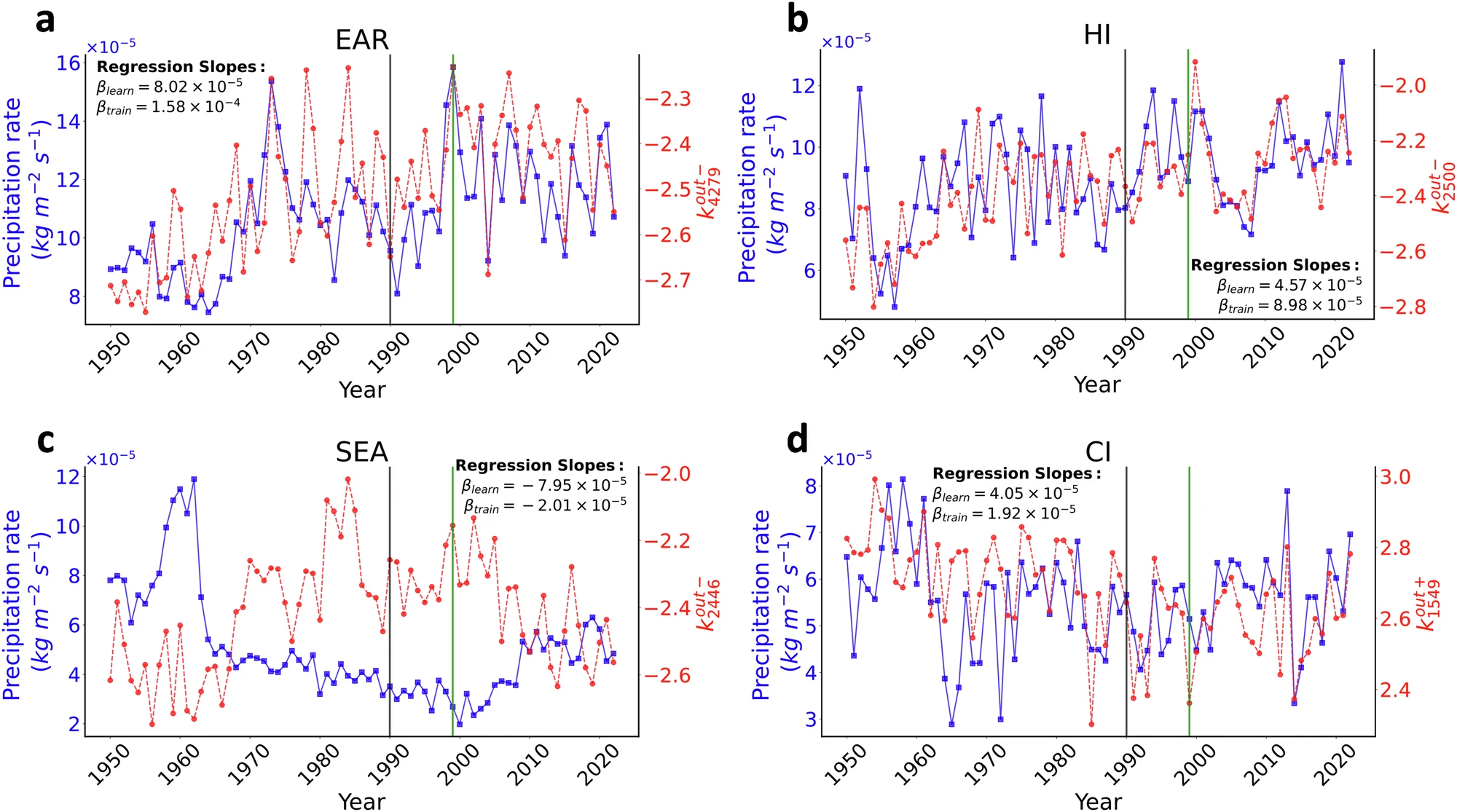
Tropical monsoon rainfall can be predicted with lead times up to 10 months
Presents methods and evidence showing tropical monsoon rainfall can be predicted with lead times up to 10 months, published in Communications Earth & Environment.
News
Professor Jingfang Fan’s team at Beijing Normal University publishes research on the universality of synchronous critical phase transitions in Physical Review Letters (opens in a new tab)
Professor Fan Jingfang’s team publishes a perspective article on the interdisciplinary integration of Earth system science and complex system science in Fundamental Research. (opens in a new tab)
Professor Fan Jingfang’s Team at Beijing Normal University Publishes a Review on Tipping Points and Cascading Transitions in the Earth System in National Science Review. (opens in a new tab)
Professor Fan Jingfang’s Research Team at Beijing Normal University Publishes Findings on Dynamic Percolation Phase Transition in Nature Communications. (opens in a new tab)
Recent Publications
Criticality and Universality of the Generalized Kuramoto Model
Fundamental Research01 September 2026
Emergence at the crossroads of Earth system science and complex systems science
NSR07 August 2026Tipping Points and Cascading Transitions: Methods, Principles, and Evidence

Contact & Collaboration
- Address
- Room 9911, Jingshi Building, Beijing Normal University
- Postal code
- 100875
- Phone
- +86 10 58800116
- Graduate admissions
- https://sss.bnu.edu.cn/yjszsztw/